The lead
FCC approves SpaceX plan for up to 1 million orbital data-center satellites
The FCC approves orbital data centers from SpaceX, Hera sends close-ups of the DART asteroids, and a preprint tightens the security proof for FALCON signatures.
The Federal Communications Commission has granted SpaceX conditional authorization to deploy up to 1 million Starmind satellites, designed to work as data centers in orbit. Ars Technica reports that a fully deployed constellation would increase the number of satellites in orbit roughly 50-fold. SpaceX filed its petition on Jan. 30, 2026, and Spaceflight Now says the company is building the spacecraft with Nvidia.
The order sets deadlines. The first satellite must fly by Nov. 25, 2033, half the constellation must be up by Nov. 25, 2038, and all of it by Nov. 25, 2040. Elon Musk has said he expects the first launch in the third quarter of 2027, with volume rising in 2028 and 2029. SpaceX now operates nearly 11,200 Starlink satellites. Phys.org reports that the decision has raised skepticism and alarm among some scientists.
Sources: Ars Technica, Spaceflight Now, Phys.org
Road to Mars
Hera returns first close-ups of the asteroids NASA's DART struck
The European Space Agency has released the first close-up images from Hera of Didymos and Dimorphos, the targets of NASA's DART mission. DART hit Dimorphos in September 2022 and shortened its orbit around Didymos by about 33 minutes. Ars Technica describes a chaotic scene at the pair. Phys.org reports that Hera also captured Dimorphos casting its shadow across part of Didymos in an eclipse.
China launches Shenzhou 24 with its first foreign crew member
China launched the Shenzhou 24 spacecraft on Wednesday with three astronauts, two Chinese and one Pakistani. The Pakistani astronaut is the first foreign crew member to travel to China's space station, according to Phys.org.
Europa Clipper to swing past Earth on its way to Jupiter
NASA's Europa Clipper will soon fly past Earth before its yearslong trip to Jupiter. The flyby gives the spacecraft a boost that saves propellant. At Jupiter, the orbiter will study whether the ocean under the icy shell of the moon Europa has the ingredients for life.
Ten launches due this week, including crews and cargo for two space stations
NASASpaceflight lists ten rockets set to launch over the next week. Russia launched Progress MS-36 to the International Space Station on Nov. 24, and CRS NG-25 is also due to bring supplies there. Shenzhou 24 is carrying the next crew to China's Tiangong station. Falcon 9 has two Space Force missions from Vandenberg, and Electron will launch a radar satellite.
Lunar craters proposed as natural shielding for Moon base reactors
A new paper from researchers at Los Alamos, NASA Glenn, Oak Ridge, Idaho National Lab and Lockheed Martin looks at using lunar craters as radiation shielding for nuclear reactors. It was presented at the American Nuclear Society's NETS conference in April. Reactors are the long-planned power source for a lunar base, because the two-week lunar night can drain solar-charged batteries.
Potatoes grown in simulated lunar soil found safe to eat
Researchers report that potatoes grown in simulated lunar soil fortified with organic matter are safe to eat. Their growth and yields were comparable to those of potatoes grown on Earth, according to Universe Today.
The Lab
Preprint gives first full quantum-model security proof for FALCON signatures
A preprint on arXiv reports the first complete security proof for the FALCON signature scheme in the quantum random oracle model. FALCON is one of three schemes NIST chose to standardize against quantum attacks. The authors reduce its security to the ring inhomogeneous short integer solution problem and the NTRU learning problem, and give parameter sets that meet NIST's required security levels.
Preprint: Merkle trees cannot be beaten on verifier work in the random oracle model
A preprint on arXiv proves that hash-based vector commitments cannot have a verifier that makes a sublogarithmic number of hash evaluations in the random oracle model. Merkle trees let a verifier open a bit with log n hash evaluations. The authors show this is optimal up to constant factors, and that high-arity Merkle trees match the bound.
OSIRIS-REx leaders publish lessons learned from the Bennu sample mission
A report on arXiv sets out lessons from OSIRIS-REx, which returned at least 121.6 g from asteroid Bennu in September 2023. The mission was proposed for $811 million and finished for $828 million, with more than $52 million of reserves returned unused. The lessons cover six areas, from governance to data archiving, and include recommendations for future sample-return missions.
Sound Money
Forum post proposes combining BIP-361 and PACTs for Bitcoin's quantum transition
A contributor on Delving Bitcoin proposes a quantum roadmap that combines BIP-361 with Dan Robinson's PACT proposal. It would add quantum-resistant addresses, allow a migration window, then freeze vulnerable legacy spending. PACT registration would stay open longer, with a maturation period such as 365 days before recovery. The author invites comments and calls it a reasonable compromise.
Post describes how wallet rebroadcast can link an address to a node's IP
A Delving Bitcoin post argues that Bitcoin Core's wallet rebroadcast, which re-announces an unconfirmed transaction after 12 to 36 hours, is a deterministic signal. In the author's simulation, planting a small payment let an observer link an address to the node tracking it 100% of the time. The post also discusses suggested mitigations.
Stanford's David Tse describes Praxis, a witness-encryption approach for Bitcoin
In a Bitcoin Magazine interview, Stanford professor David Tse describes Praxis, his team's paper on witness encryption. He says it would let Bitcoin be spent according to a pre-specified program, such as a loan being repaid, without a soft fork. The conversation also covers trustless bridges and lending.
Watch

Bob Mills - 2026 Mars Society Conference, Day Two
The Mars Society · Nov 26, 2026
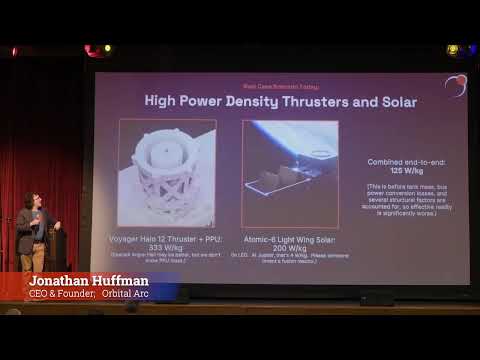
Jonathan Huffman - 2026 Mars Society Conference, Day Two
The Mars Society · Nov 25, 2026

Pete Freeland - 2026 Mars Society Conference, Day Two
The Mars Society · Nov 25, 2026
The Marscoin Ledger
Marscoin ran slightly short of its block count; price $0.0608
Marscoin produced 680 blocks in the last day against 702 expected. Five waits ran past 30 minutes, the longest 63 minutes. The median gap between blocks was 8 seconds, against a target of 123. The price is $0.0608 per MARS. The swap market has 14 offers on the book, with 9,870 MARS on offer.